

How To Get Medical Services When Cobra Hasnt Gone Through

Vickie Gregorio with Heartland Workforce Solutions in Omaha, Neb., updates a whiteboard outside the workforce office every bit unemployed task seekers wait in line for assistance. A recent change in federal rules gives some people who have lost their health programme along with their job more than the usual threescore days to sign upward for COBRA health coverage. Nati Harnik/AP hide explanation
toggle caption
Nati Harnik/AP
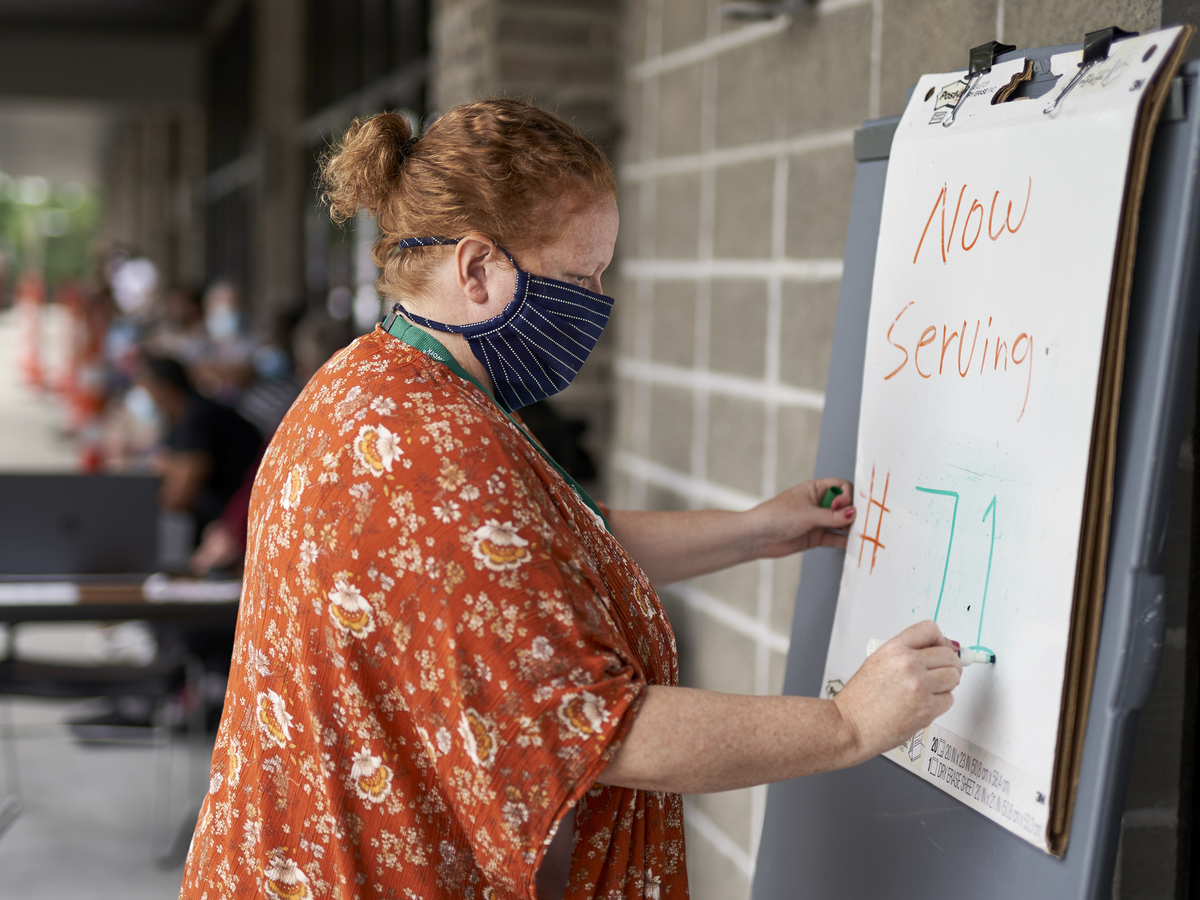
Vickie Gregorio with Heartland Workforce Solutions in Omaha, Neb., updates a whiteboard outside the workforce function as unemployed job seekers wait in line for assistance. A recent change in federal rules gives some people who take lost their health plan along with their job more the usual 60 days to sign upward for COBRA health coverage.
Nati Harnik/AP
People who have been laid off or furloughed from their jobs at present have significantly more time to decide whether to hang on to their employer-sponsored wellness insurance, according to a contempo federal rule.
Under the federal police force known as COBRA, people who lose their task-based coverage because of a layoff or a reduction in their hours usually have 60 days to decide whether to go along with that aforementioned health program. Merely under the rule issued this spring, that clock doesn't start ticking until the end of the COVID-19 "outbreak period" that started March 1 and information technology will continue for 60 days later on the COVID-19 national emergency is alleged to be at an end. That end date hasn't been determined all the same.
With this extension of the time frame to sign for up for COBRA coverage, people have at least 120 days to decide whether they want to elect COBRA, and perhaps longer depending on when they were laid off.
Have the case of someone who was laid off in April, and imagine that the national emergency ends Aug. 31. Sixty days after that initial date would take that person to the cease of Oct. So the regular 60-day COBRA election menses would beginning later that.
Some health policy experts question the usefulness of the modify given how expensive COBRA-based coverage can be for consumers and how express its reach is.
The COBRA extension is available only to people who worked at companies with 20 or more employees and who had job-sponsored coverage before being laid off or furloughed. It isn't an option for people who are uninsured, self-employed or who work for modest companies. And fifty-fifty for people who are eligible for COBRA, it'southward an expensive pick because workers have to pay both their portion of the premium and their one-time employer'south share, plus a two% authoritative fee.
"For ideological reasons, this assistants can't exercise anything to expand on the Affordable Care Deed'south safety net," says Sabrina Corlette, a research professor at Georgetown University'due south Centre on Health Insurance Reforms. "Then they're using these other vehicles. Simply it's actually a fig leaf. Information technology doesn't do much to actually help people."
What does this dominion change mean for workers? If you take lost your chore, here are some things to consider.
Pros and cons of playing a waiting game
Under the new dominion, workers tin can proceed their COBRA options open for far longer than earlier. Information technology'south always been the case that people could have a expect-and-see approach to signing upwards for COBRA during the first sixty days later losing their coverage. If they needed care during that time, they could elect COBRA, pay the dorsum premiums and proceed their coverage. Just if they didn't need care during that time, they could save a chunk of money on premiums before opting for other coverage to kick in afterward the 60-twenty-four hour period period.
Now, people have fifty-fifty more time to await and encounter. Nether the rule, once the administration declares the national emergency over, laid-off workers would get 120 days to determine whether to purchase their job-based insurance — 60 days under the new rule and the regular lx days immune every bit part of the COBRA police force.
"It becomes a long-term unpaid insurance policy," says Jason Levitis, a fellow at the Center for Health Policy at the Brookings Establishment. "There'south no reason to enroll until something bad happens."
Still, holding off on enrolling would not be without adventure, consumer advocates point out. Someone who has a serious medical emergency — a car accident or a stroke — might not be able to process their COBRA paperwork before they need medical intendance.
Plus, waiting too long could affect people's power to sign up for other health coverage. When people lose job-based health insurance, it triggers a special enrollment period that allows them to sign upward for new coverage on their land health insurance marketplace for upward to 60 days after.
"Y'all could miss your opportunity to enroll in the [insurance] exchange" created under the Affordable Intendance Human activity, says Katy Johnson, senior counsel for health policy at the American Benefits Quango, an employer advocacy grouping.
Don't count on the boss to clue you lot in
Employers are non mandated to tell people promptly near their eligibility for COBRA. The same federal rule that gives workers more than time to sign upwards for COBRA also pushes dorsum the notification requirements for employers.
"One time an employer lays you off, they don't have to notify you lot that you're eligible for COBRA until after the emergency period," says Karen Pollitz, a senior fellow at the Kaiser Family unit Foundation.
For many employers, particularly large ones that outsource their benefits administration, notifications are routine and are continuing despite the federal change, says Alan Silver, a senior manager at benefits consultant Willis Towers Watson. Nonetheless, for smaller companies with fewer than 200 employees, getting the data out to workers might be an issue, Silverish says.
Costs can be jaw-dropping
In a survey conducted terminal leap by the Commonwealth Fund, x% of workers laid off or furloughed because of the coronavirus pandemic reported choosing COBRA coverage for health insurance.
The upside for former employees is that sticking with their previous employer's plan means they don't have to commencement from scratch paying down a new deductible on a new program. Nor practice they have to find new doctors, as often happens when people switch health plans and provider networks change.
Simply the expense can exist jaw-dropping. According to a Kaiser Family Foundation assay, someone 48 years old paid $599 a month, on average, for private COBRA coverage last yr. Nether the new extended rules for sign-upwardly, the high price of choosing that option could climb chop-chop: If people elect COBRA several months after losing their coverage they could exist on the hook for thousands of dollars in back premiums.
And in the effect the employer goes out of business — either when the employee is laid off or later — there's no health insurance to continue to purchase.
Might hospitals step in to pay premiums?
Employers are typically not big fans of COBRA. Workers who elect to participate in the plan are typically older and sicker than others with employer coverage, the Kaiser Family Foundation analysis found. They may have serious medical conditions that brand them expensive to encompass and enhance an employer'southward overall health care costs.
Some policy experts are concerned that giving people more time to sign up for COBRA leaves the door open for hospitals or other providers to offering to pay sick patients' dorsum premiums in guild to increment their own payment above what they'd receive if someone were on Medicaid or uninsured. Doing so could be a boon for some patients simply heighten wellness care costs for employers, says Christopher Condeluci, a health care lawyer who does legal and policy work around the Affordable Care Human action and ERISA issues.
"Employers are worried," says Pollitz. Later on getting laid off, "what if you're uninsured and you wind upward in the hospital six months in, and so the hospital social worker learns y'all're eligible for COBRA and offers to pay your premium?"
Kaiser Health News is a nonprofit, editorially independent program of the Kaiser Family Foundation, and not affiliated with Kaiser Permanente.

How To Get Medical Services When Cobra Hasnt Gone Through,
Source: https://www.npr.org/sections/health-shots/2020/07/20/892140500/rule-change-gives-laid-off-workers-more-time-to-sign-up-for-cobra-insurance
Posted by: shoemakerwarl1992.blogspot.com
0 Response to "How To Get Medical Services When Cobra Hasnt Gone Through"
Post a Comment